Brain Fog and Emotional Numbness Explained
What Is Brain Fog?
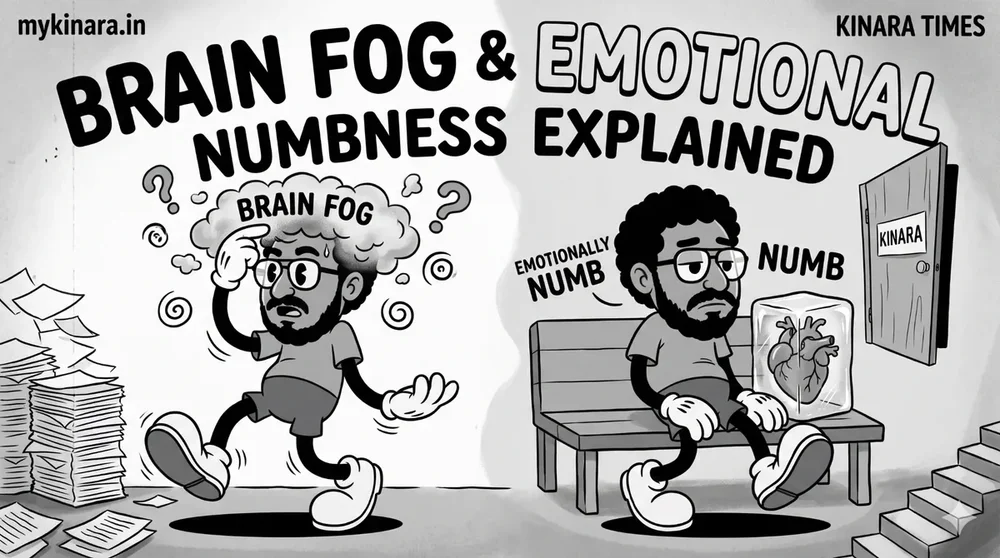
Have you ever read the same paragraph several times without taking it in, forgotten a familiar word, or struggled to focus on a simple task? Many people describe experiences like these as “brain fog.”
Brain fog is an everyday phrase, not a medical diagnosis. It can describe difficulties with attention, memory or clear thinking. Research has found these difficulties among some people experiencing depression, sometimes even after their mood improves (Rock et al., 2014).
What Is Emotional Numbness?
Emotional numbness, sometimes called emotional blunting, can feel like having the volume turned down on your feelings. Someone may struggle to feel excitement, sadness or affection as strongly as before.
This can happen during depression. Some people taking antidepressants also describe it, although research suggests that the feeling cannot always be separated from depression itself (Goodwin et al., 2017).
Does It Mean You Have a Mental Illness?
Not necessarily. Poor sleep, stress, physical illness, medicines and other factors may affect concentration or emotions. A label found online cannot tell you the cause. What matters is when the change began, how long it lasts and how it affects daily life.
What Can Help?
Try noting when you feel unusually foggy or disconnected, whether your sleep has changed and whether you recently started or changed medication. Share this information with a qualified healthcare professional if symptoms continue. Do not stop prescribed medication on your own.
Conclusion
Brain fog and emotional numbness are real experiences, even when the cause is unclear. Paying attention to changes and getting an assessment can help you find appropriate support.
References
Goodwin, G. M., Price, J., de Bodinat, C., & Laredo, J. (2017). Emotional blunting with antidepressant treatments: A survey among depressed patients. Journal of Affective Disorders, 221, 31–35.
Rock, P. L., Roiser, J. P., Riedel, W. J., & Blackwell, A. D. (2014). Cognitive impairment in depression: A systematic review and meta-analysis. Psychological Medicine, 44(10), 2029–2040.