Dissociation and Mind–Body Symptoms Explained
What Is Dissociation?
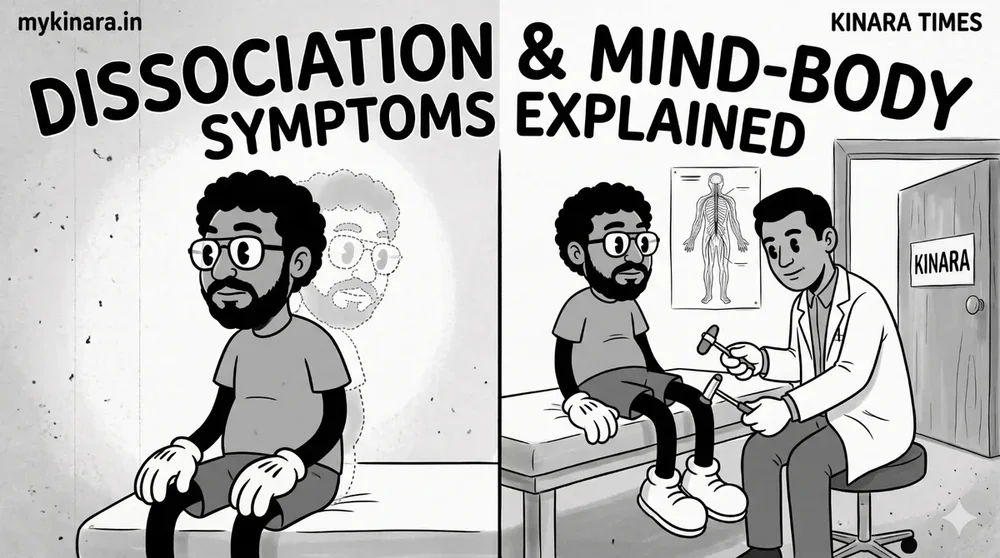
Have you ever felt as if you were watching yourself from the outside, or as though the world around you seemed unreal? Some people describe experiences like these as dissociation. They may feel disconnected from their emotions, memories, body or surroundings.
Dissociation can occur in different mental health conditions. It is an experience, not a diagnosis on its own (Lyssenko et al., 2018).
What Are Mind–Body Symptoms?
Our brains and bodies constantly work together. Some people develop symptoms such as shaking, weakness, difficulty walking or episodes that resemble seizures. One possible explanation is functional neurological disorder, or FND.
In FND, the symptoms are genuine. The problem is with how the nervous system functions, rather than necessarily with visible damage to it. A clinician diagnoses FND using particular findings during an examination—not simply because a scan looks normal (Espay et al., 2018).
Common Misunderstandings
These symptoms should never be dismissed as “made up” or “attention-seeking.” At the same time, not every unexplained symptom is FND or related to stress. New weakness, seizures or sudden changes in awareness deserve prompt medical assessment to rule out other causes.
What Can Help?
Care depends on the symptoms and diagnosis. A clear explanation, appropriate physical rehabilitation, psychological support when helpful and follow-up with relevant specialists may be part of treatment for FND (Espay et al., 2018). People experiencing dissociation may also benefit from assessment of stress, trauma, sleep and other possible factors.
Conclusion
Feeling disconnected or having unexplained physical symptoms can be frightening. The right response is to listen, investigate carefully and take the person's experience seriously.
References
Espay, A. J., Aybek, S., Carson, A., et al. (2018). Current concepts in diagnosis and treatment of functional neurological disorders. JAMA Neurology, 75(9), 1132–1141.
Lyssenko, L., Schmahl, C., Bockhacker, L., et al. (2018). Dissociation in psychiatric disorders: A meta-analysis of studies using the Dissociative Experiences Scale. American Journal of Psychiatry, 175(1), 37–46.