Mental Health Stigma in India and Beyond
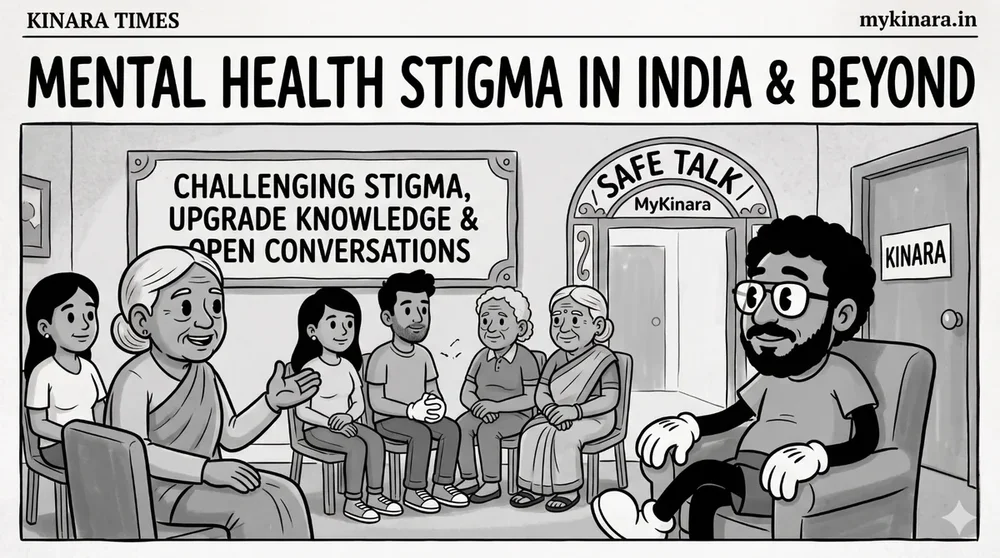
What Is Mental Health Stigma?
Stigma is what happens when someone is judged, excluded or treated unfairly because of a mental health concern. It can sound like “people with depression are weak” or “someone with a mental illness cannot work.” These statements are misleading and hurtful.
What Does Research Say About India?
A review of studies involving young people in India found that misunderstandings and negative attitudes towards mental health problems were common in the groups studied. Researchers recommended using relatable examples and everyday language to make mental health information easier to understand (Gaiha et al., 2020).
It is important not to treat India as one uniform culture. Families, communities and individuals may hold very different beliefs.
Is Stigma Different Abroad?
Stigma is not limited to any one country. It can appear in schools, workplaces, families and even healthcare settings. Some people begin to believe unfair things said about them, making it harder to reach out for support (Thornicroft et al., 2022).
What Can Help Reduce It?
Research in India suggests that meaningful change needs more than a poster or a single awareness event. Approaches can include accurate information, respectful conversations and opportunities to hear directly from people who have experienced mental health difficulties (Kaur et al., 2021).
Simple choices matter too: do not use a diagnosis as an insult, protect someone's privacy and ask what support they actually want.
Conclusion
Mental health stigma is learned, and attitudes can change. Better knowledge and everyday kindness can make it easier for people to seek care without fear.
References
Gaiha, S. M., Taylor Salisbury, T., Koschorke, M., Raman, U., & Petticrew, M. (2020). Stigma associated with mental health problems among young people in India: A systematic review of magnitude, manifestations and recommendations. BMC Psychiatry, 20, 538.
Kaur, A., Kallakuri, S., Kohrt, B. A., et al. (2021). Systematic review of interventions to reduce mental health stigma in India. Asian Journal of Psychiatry, 55, 102466.
Thornicroft, G., Sunkel, C., Aliev, A. A., et al. (2022). The Lancet Commission on ending stigma and discrimination in mental health. The Lancet, 400(10361), 1438–1480.