Nicotine Addiction: Why Quitting Takes Support
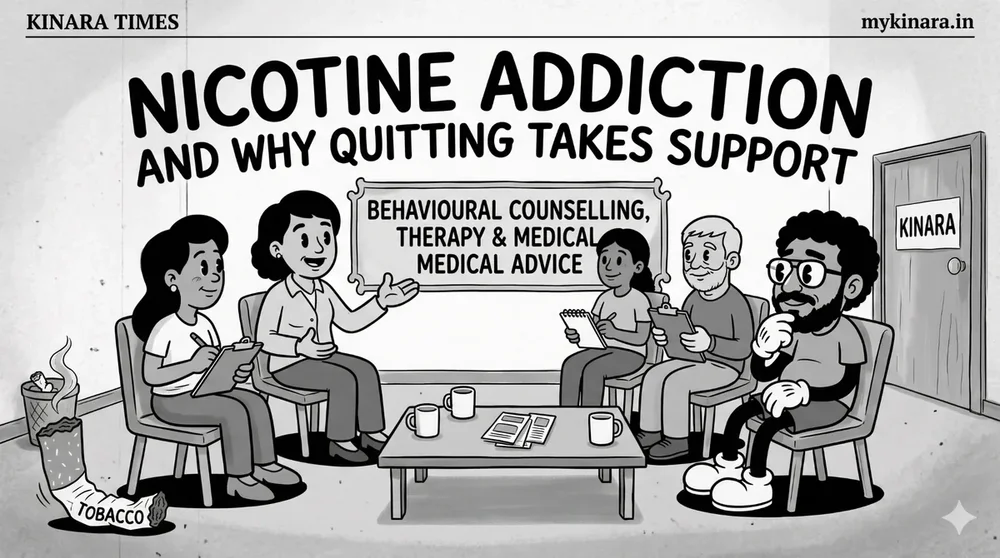
What Is Nicotine Addiction?
Many people want to stop smoking but find themselves reaching for another cigarette. This is not simply a lack of willpower. Nicotine changes how the brain responds to rewards and can create dependence. When someone cuts down or quits, they may experience cravings, irritability, restlessness, poor concentration or sleep changes.
Why Is Quitting Difficult?
Smoking can become linked to everyday routines: tea breaks, travel, stress or time spent with friends. A craving may come from nicotine withdrawal, an old habit, or both. It helps to identify when the urge appears instead of blaming yourself.
Common Misunderstandings
One setback does not mean all progress has been lost. Many people need more than one attempt before quitting successfully. Support should be practical and free from judgement.
What Does the Research Say Helps?
Strong research shows that several treatments improve the chances of stopping smoking. These include personal or group counselling, nicotine replacement products such as patches and gum, and prescription medicines such as varenicline or bupropion. Combining a nicotine patch with a faster-acting product can be more effective than using one product alone (Livingstone-Banks et al., 2024).
A quit plan can include choosing a date, preparing for triggers, asking trusted people for support and reviewing what worked after a difficult day. Medication choices and suitability should be discussed with a clinician.
Conclusion
Quitting smoking is a process, not a test of character. Evidence-based support can make that process easier. To learn about KINARA's six-session tobacco cessation programme, visit Ash Out.
References
Livingstone-Banks, J., Lindson, N., & Hartmann-Boyce, J. (2024). Effects of interventions to combat tobacco addiction: Cochrane update of 2021 to 2023 reviews. Addiction, 119(12), 2101–2115.