Understanding Psychosis and Serious Mental Illness
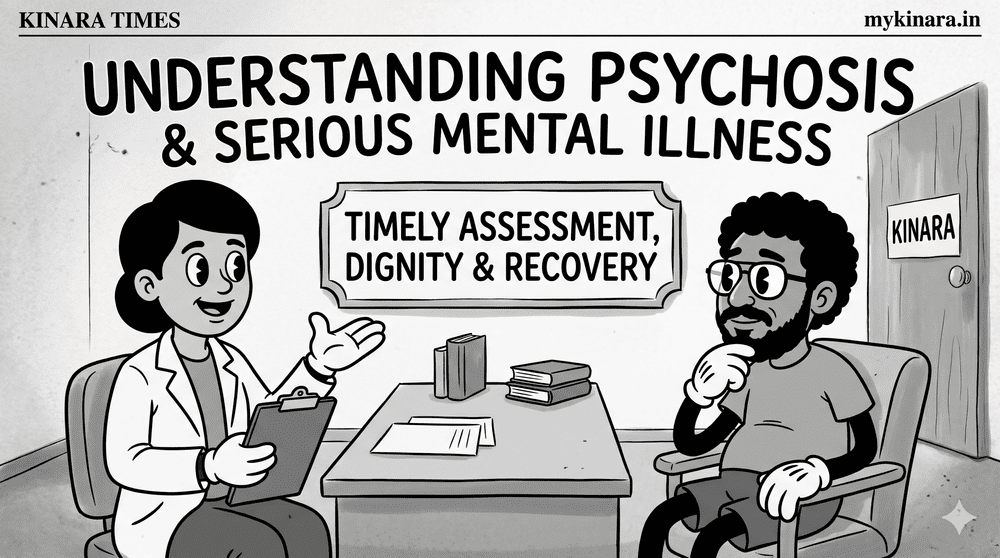
Psychosis can change how someone experiences or interprets reality. A person may hear voices, hold beliefs that others do not share or experience disorganised thinking. Psychosis can occur in several conditions; it does not automatically mean schizophrenia (Owen et al., 2016). “Serious mental illness” generally describes a mental health condition associated with substantial difficulty in daily functioning, not a judgement about the person. Treatment, practical support and respectful relationships can make a difference. People experiencing psychosis deserve timely assessment, dignity and opportunities for recovery (Thornicroft et al., 2022).
References
Owen, M. J., Sawa, A., & Mortensen, P. B. (2016). Schizophrenia. The Lancet, 388(10039), 86–97.
Thornicroft, G., Sunkel, C., Aliev, A. A., et al. (2022). The Lancet Commission on ending stigma and discrimination in mental health. The Lancet, 400(10361), 1438–1480.